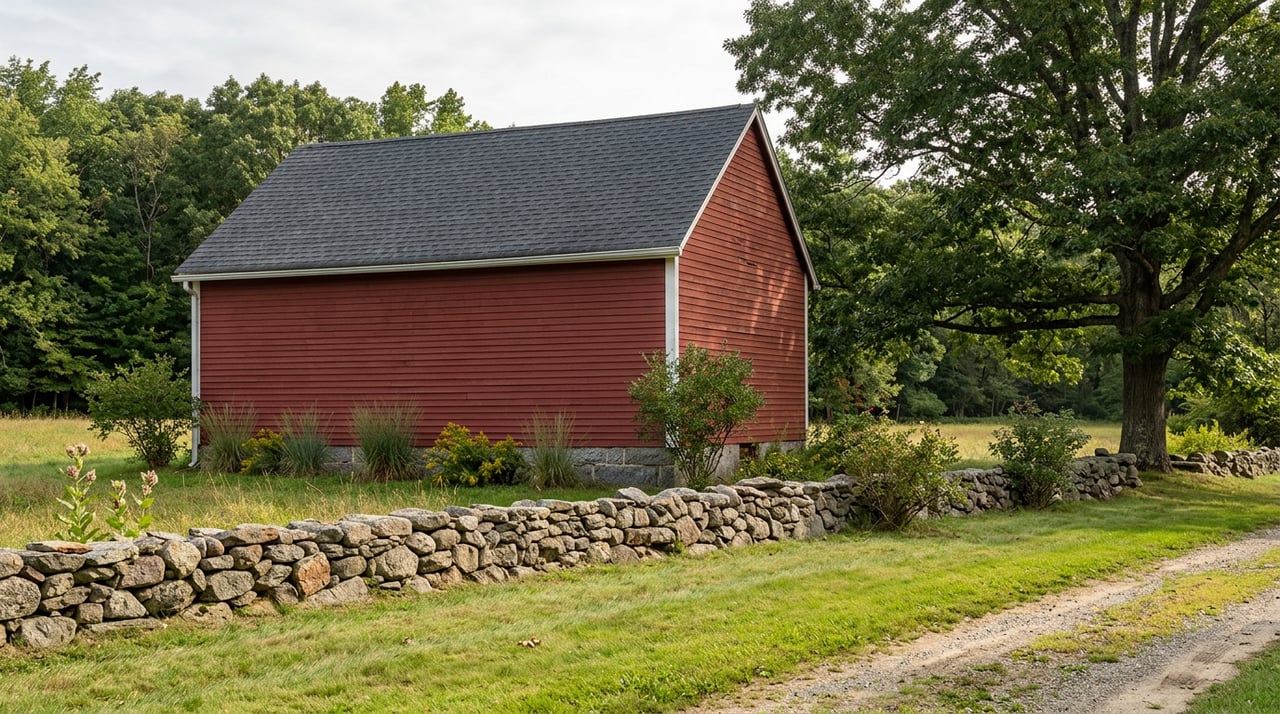
Right now, if you drive down State Road to Shifting Lots Preserve hoping to park and walk straight to the water, you can't. Not because anything is closed exactly, but because Wildlands Trust keeps the preserve's four-car lot locked from mid-May through mid-September, pedestrian access only, and points visitors up the road to leave their car at Ellisville Harbor State Park's lot instead. On September 15, that changes. The Shifting Lots lot reopens for the season. On the same day, the dog ban lifts on the beach next door. Two separate-feeling rules, tied to the same nesting calendar, flip within about 48 hours of each other, and most people who use this stretch of shoreline never quite connect the two until they've been caught out by one or the other.
That's really the story of Ellisville Harbor this time of year. It isn't one park with one rule. It's two adjoining preserves sharing a single marsh, and a regulatory date that quietly reorganizes how residents move between them.
Two Preserves, One Marsh Between Them
Ellisville Harbor State Park and Shifting Lots Preserve sit on opposite sides of the same tidal inlet, close enough that longtime visitors treat them as one continuous walk rather than two separate destinations. The state park, 100 acres set aside by Massachusetts in 1991, is managed by the DCR out of a large lot at 1861 State Road. Shifting Lots belongs to Wildlands Trust, which received the land in 2003 from a group of former owners, Elin Danielson, Ruth Lapham, Albert and Laura Marsh, and Donald P. Quinn.
Between them runs the marsh itself. The state park's own materials describe it as a 55-acre salt marsh. The Friends of Ellisville Marsh, the local nonprofit that has spent nearly two decades monitoring it, count their stewardship area at closer to 70 acres, likely a difference in where each organization draws the boundary rather than a disagreement about the land. Either way, it's the same water, the same barrier beach, and the same rules governing both sides.
The two access points are not equivalent, which is part of why the September switch matters. From the state park's main lot, the walk out to the beach runs about half a mile each way, a bit over a mile round trip, past a boarded-up cottage and down a short, steep pitch near the end. From Shifting Lots' own lot, when it's open, the walk to the beach is closer to 200 feet. It is, practically speaking, a driveway to sand. For anyone who has made the longer walk from the state park side all summer because Shifting Lots was pedestrian-only, mid-September is the day the shortcut reopens.
Why The Rule Exists
The reason both properties operate on the same calendar comes down to what nests on the barrier beach between them. Piping plovers and least terns build their nests directly in the sand, and chicks can take up to five weeks before they're able to fly, which is the window the state uses to justify keeping dogs off the beach from April 1 through September 14. The rule prohibits dogs and other pets on the beach during that period, except service animals.
It's worked, at least at the state level. According to Wildlands Trust, Massachusetts' nesting population of piping plovers grew from 135 pairs in 1986 to 956 pairs by 2021, a nearly sevenfold increase that conservation groups attribute to fencing, monitoring, and public education rather than any single intervention. Locally, that work shows up every spring when volunteers from Wildlands Trust and the Friends of Ellisville Marsh string simple wood-stake-and-twine fencing around the historic nesting area at Shifting Lots, a partnership that also involves Mass Audubon's Coastal Waterbird Program. The fencing doesn't physically stop anyone from walking through, but it flags the nesting zone clearly enough that most beachgoers steer around it without needing to be told twice.
What Actually Flips That Week
Framed as a single sentence, "the dog ban lifts on September 15" undersells how much changes at once. In practice, the reset touches several things:
- Dogs are allowed back on the Ellisville Harbor State Park beach for the first time since spring, ending the roughly five-and-a-half-month stretch when they were restricted to the trail.
- Shifting Lots Preserve's four-car lot reopens, meaning visitors to that side of the marsh no longer have to leave a car at the state park and walk over.
- The short 200-foot path from Shifting Lots' own lot becomes the fastest route to the barrier beach again, a route that stays open through mid-May.
- Summer beach traffic starts thinning out, and multiple visitor accounts of the trail describe it as quiet even on holiday weekends once the season turns.
One Plymouth Independent columnist, new to town, described taking his dogs out to Ellisville Harbor over a Memorial Day weekend and admitted to bending the beach dog rule once he was already out there. Other visitors have made the opposite mistake, showing up expecting the walk to the water to be a mile or more and finding it's closer to a half mile from the state park lot. Both are easy errors for anyone unfamiliar with how the trail distance and the nesting calendar actually line up.
| April 1 – September 14 | September 15 – May 15 | |
|---|---|---|
| Ellisville Harbor SP beach | Dogs prohibited (except service animals) | Dogs permitted |
| Shifting Lots Preserve lot | Pedestrian access only; park at state park lot | On-site lot open, four spaces |
The Marsh Has Its Own Fall Rhythm
The Friends of Ellisville Marsh formed in 2007, when five Ellisville neighbors decided that watching the marsh degrade for another decade wasn't an option. The inlet had been blocked since October of 1991, when the No Name Storm, later nicknamed the Perfect Storm, choked off the channel and cut the tidal flow that kept the marsh grasses alive. Under president Eric Cody, who later wrote a full account of the effort called Rescuing Ellisville Marsh: The Long Fight to Restore Lost Connections, the group became the only Massachusetts nonprofit to date to secure every local, state, and federal permit needed to reopen a blocked marsh inlet without spending a dollar of public money.
Their calendar runs on its own seasonal logic, separate from the DCR's dog rule but overlapping with it. Spring brings a beach cleanup at Shifting Lots to haul off the winter's accumulated debris, plus a co-hosted "Welcome Spring" bird walk with Wildlands Trust and Manomet, Inc. Fall brings the group's own newsletter, reporting back on how the nesting season actually went, how many pairs returned, whether the fencing held. For residents who want the fuller picture behind the rule change rather than just the date on the sign, that newsletter is where it shows up.
Seals Come Back Into View As The Water Cools
There's a quieter payoff to the September reset that has nothing to do with dogs or parking. The state's own description of Ellisville Harbor notes that visitors can spot fishing boats and harbor seals off the coast even in the winter months, and longtime visitors describe low tide as the best time to catch them hauled out on the rocks. Summer crowds and midday heat tend to push that kind of quiet wildlife-watching to the margins. Once the beach traffic thins and the water starts to cool, the same stretch of rocky shoreline that's been full of swimmers becomes a better bet for spotting a seal lolling in the shallows, especially for the dog owners who, as of September 15, can finally bring their leashed companions along for the walk.
None of this is a reason to move to Ellisville. It's just how the place actually works this time of year, and it's worth knowing before you plan a Saturday around it.
If you already call Ellisville home and you're weighing a next move here on the South Shore, whether that's upsizing, downsizing, or just curious what your options look like, Lynne Morey has spent more than two decades working this exact stretch of coastline. Request a free consultation whenever you're ready to talk it through.